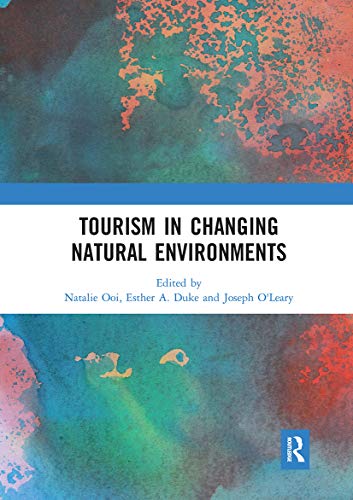
Amazon cover image
Image from Amazon.com

Tourism in Changing Natural Environments

By: Contributor(s): Language: English Publication details: Oxford Routledge 20201218Edition: 1Description: 154 pISBN:
  • 9780367671280
Summary: Natural environments, and the human interactions that occur within, are continuously changing and evolving. This comprehensive volume explores how the impacts of climate change, natural and man-made disasters, economic instability, and other macro-environmental factors can have profound implications for local and global economies, fragile ecosystems, and human cultures and livelihoods. The authors examine the numerous ways in which changes in the natural environment impact tourism, and how the tourism industry is responding and adapting to such changes, in both developed and developing regions. Through the various case studies that examine human interaction within what are often fragile ecosystems, this book makes it clear that, while adaptation can be passive in nature, it can and should be much more proactive, with individuals and organizations seeking improved knowledge and learning. Such actions will contribute to greater resilience within the tourism industry, whether in response to climate change and its subsequent impacts, or an increasing scarcity of the natural resources upon which tourism relies. This book was originally published as a special issue of the journal Tourism Geographies.
Item type:
Tags from this library: No tags from this library for this title. Log in to add tags.
Star ratings
    Average rating: 0.0 (0 votes)
No physical items for this record

Natural environments, and the human interactions that occur within, are continuously changing and evolving. This comprehensive volume explores how the impacts of climate change, natural and man-made disasters, economic instability, and other macro-environmental factors can have profound implications for local and global economies, fragile ecosystems, and human cultures and livelihoods. The authors examine the numerous ways in which changes in the natural environment impact tourism, and how the tourism industry is responding and adapting to such changes, in both developed and developing regions. Through the various case studies that examine human interaction within what are often fragile ecosystems, this book makes it clear that, while adaptation can be passive in nature, it can and should be much more proactive, with individuals and organizations seeking improved knowledge and learning. Such actions will contribute to greater resilience within the tourism industry, whether in response to climate change and its subsequent impacts, or an increasing scarcity of the natural resources upon which tourism relies. This book was originally published as a special issue of the journal Tourism Geographies.

There are no comments on this title.

to post a comment.